The Long Game: What Comebacks Teach Us About Tennis’s Staying Power

On Friday afternoon in Cincinnati, the scoreboard told only part of the story.
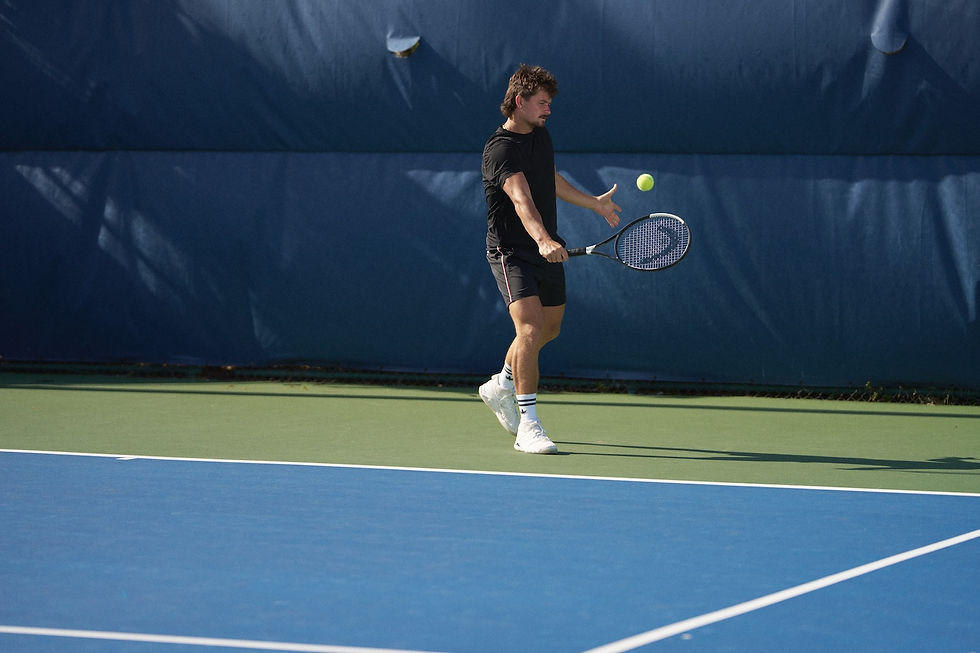
Hometown favorite JJ Wolf fell to James Duckworth, 7-5, 7-6, in the first round of the Cincinnati Open. It was a close match in difficult summer conditions, decided by a handful of points. For Wolf, who has been working his way back after an extended injury absence, the result ended a tournament run that had already required him to battle through qualifying and earn his place in the main draw.
There is a tendency in sports to treat a comeback as a single triumphant moment: the winning match, the raised trophy or the return to a career-high ranking. Tennis tells a more honest story. A comeback is usually a process. It is the early practice, the rebuilt confidence, the qualifying draw and the willingness to compete again before everything feels settled.
That makes Wolf’s return worth watching—not only for tennis fans, but for club managers and racquet professionals. His story is one of three comebacks unfolding at once: an athlete returning to the tour, an American tennis brand returning to its roots and a sport proving, once again, that its greatest strength is its ability to keep people connected for a lifetime.
The courage to return
Wolf’s rise was fast and memorable. The Cincinnati native became a standout at Ohio State, turned professional in 2019, reached a career-high world ranking of No. 39 in 2023 and advanced to the fourth round of that year’s Australian Open. Injuries then interrupted his momentum and forced him into the least visible part of an athlete’s career: recovery.
His recent return is a reminder that progress rarely follows a straight line. A narrow loss at home may not look like the defining image of a comeback, but getting back into the arena matters. So does winning qualifying matches, testing the body under pressure and rediscovering a competitive identity point by point.
Club professionals see the same dynamic every day, just on a different scale. A member comes back after surgery. A former junior picks up a racquet after college, work and family pulled them away. A beginner returns to a clinic after a discouraging first experience. Each person is deciding whether tennis still has a place in their life.
How a club welcomes that return can determine whether it lasts.
A heritage brand, made relevant again
Wolf’s apparel partner, BOAST, is navigating a comeback of its own.

Founded in 1973, BOAST established itself as a distinctly American alternative to the European brands that defined tennis style at the time. Its combination of country-club tradition and irreverent personality made it recognizable both on and off the court. Under new ownership, the brand re-entered tennis in 2024, building from its heritage while developing modern performance and lifestyle collections.
BOAST’s partnership with Wolf—its first rostered ATP singles player in this new chapter—is especially fitting. Both athlete and brand are working to recover momentum without abandoning what made them distinctive in the first place. BOAST is also now a partner of Cliff Drysdale Tennis and Peter Burwash International, outfitting associates who bring the sport to life at clubs and resorts every day.
For operators, the lesson is not simply that nostalgia sells. Heritage only has value when it is useful in the present. A classic identity must still meet modern expectations for performance, quality and relevance. The same is true of a club. Traditions, signature events and long-standing programs are assets, but their staying power depends on how thoughtfully they are renewed for today’s members.
Tennis keeps coming back
The broader participation picture makes the theme even more compelling. According to the USTA, 27.3 million Americans played tennis in 2025, a sixth consecutive year of growth and a 54 percent increase since 2019. More than half were core players who took the court at least 10 times during the year.
Most relevant to this story, 1.7 million people returned to tennis in 2025 after being away from the sport for at least a year.
That number captures something club professionals have long understood: tennis creates a durable relationship. Players may step away, but the game remains familiar. The sound of a cleanly struck ball, the rhythm of a rally, the friendships around a weekly game and the desire to improve are powerful invitations back.
Tennis has staying power because it can change with the player. It can be developmental or competitive, individual or social, demanding or restorative. A child can learn the game, leave it for a season of life and return decades later with a new set of goals.
Turning staying power into club strategy
For club leaders, that resilience should be treated as an operating opportunity—not an assumption.
Design an intentional path back. Re-entry clinics, ratings refreshers, short-format match play and “welcome back” socials can reduce the friction for lapsed players. The message should be clear: players do not need to return at their former level to belong.
Celebrate progress, not only championships. Tournament winners deserve recognition, but so do members returning from injury, adults entering their first league and juniors moving into full-court play. Those stories make perseverance visible and help more members see themselves in the program.
Use heritage as a platform for innovation. Preserve the events and traditions members love while updating formats, apparel, communication and hospitality. The goal is not to choose between classic and current; it is to make each strengthen the other.
Build for a lifetime relationship. Junior pathways, adult instruction, competitive play and social programming should feel connected. When a member’s needs change, the club should be ready with a next chapter rather than an exit point.
Comebacks are rarely neat. They require patience, repetition and the confidence to begin again. JJ Wolf’s return to Cincinnati, BOAST’s renewed place in American tennis and the millions of players coming back to the game all tell the same story.
In tennis, staying power does not mean standing still. It means evolving without losing your identity—and always leaving the door open for the next return.